
You passed your exam, you have a radio, and then you looked out the window at a quarter-acre lot with an HOA letterhead in a drawer. That gap between the license and the first contact is exactly where Dipole and Key lives.
Practical amateur radio for real yards, real HOAs and real first contacts. That is the whole job.
Our mission
Get you on the air from the property you actually have
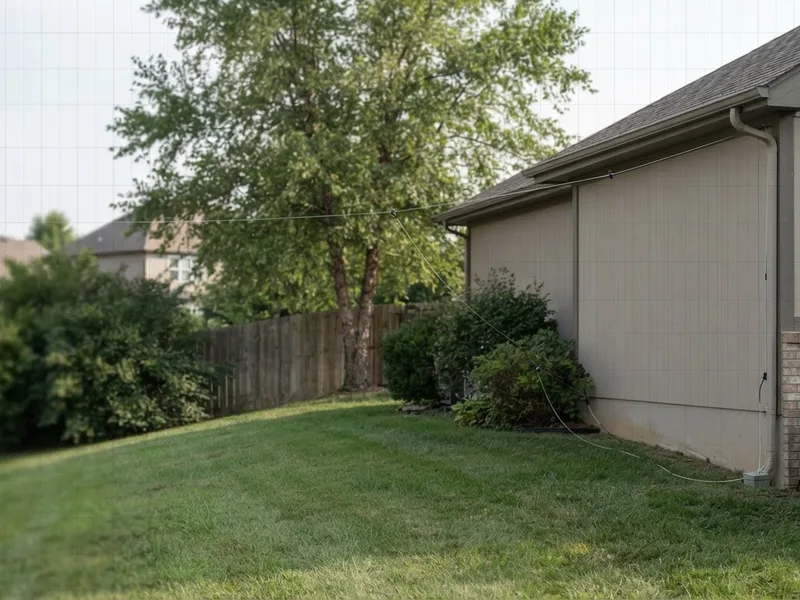
Most antenna advice assumes a tower, a big lot and tolerant neighbors. Most hams have none of those. So we start from your actual situation: the townhouse attic, the condo balcony, the suburban backyard with a maple in the wrong place.
Our mission is simple. Help newly licensed and returning operators in the US and Canada put up an antenna that works on their property, understand the rules that apply to their license class, and make real contacts on FT8, CW, SSB and satellites.
No tower farm required. No pretending a compromise antenna is something it is not.
How we work
Our approach, step by step
Start with the lot, not the catalog
Every antenna guide begins with a property type: attic, balcony, small yard or larger lot. If an attic wire will underperform a full-size dipole, we say so plainly.
Open with a Quick answer box
Every guide starts with band, license class, typical length or cost range and difficulty. You know in seconds whether it fits your situation before you read another word.
Do the math, then tell you to verify
Dimensions begin with the standard formulas, like 468 divided by frequency in MHz for a half-wave dipole in feet. Then we tell you to trim with an analyzer, because formulas are starting points, not finished antennas.
Cite the exact rule
Every regulatory claim names the license class it applies to and the exact Part 97, RIC-3 or RBR-4 section it comes from. You can check every citation yourself.
Compare on specs only
Radio and antenna comparisons are built on published specifications and documented features. We do not invent hands-on testing claims or lab results we never ran.
Honest about HOAs and the law
Here is where a lot of ham radio content gets sloppy, so let us be precise. PRB-1, the FCC policy on reasonable accommodation, applies to state and local government regulation. It does not override private covenants, conditions and restrictions you agreed to when you bought the house.
And OTARD, the over-the-air reception rule, covers receive-only antennas like satellite dishes and TV antennas. It does not cover transmitting amateur antennas. We will not tell you otherwise, because finding that out after a dispute letter is a bad way to learn.
Where the rules leave room, we show you the options: attic antennas, stealth wires, flagpole verticals and operating portable. Where they do not, we say that too.
Who this is for
Written for you, wherever you are starting from
Dipole and Key is for the newly licensed Technician wondering which handheld and which first antenna make sense. It is for the returning General who last held a key when rigs still had tubes in the final. It is for the Canadian Basic or Advanced qualifier sorting out RBR-4, and for the Extra chasing the last few band slots.
It is also for ARES and CERT volunteers who need dependable local communications without a permanent tower, and for anyone in a condo or townhouse who has been told, incorrectly, that amateur radio is not possible there.
You do not need a big station to have a real one. You need the right antenna for your lot, a clear read on the rules, and a bit of patient guidance. That is what we are here for.
Questions, corrections or a situation we should cover?
If a guide does not match your property, or you spot a citation we should tighten, we want to hear it. Good amateur radio content is a contact sport.